


Table of Contents
II. What Are Artificial Heart Valves?
III. Why You Shouldn't Take Eliquis With an Artificial Heart Valve
IV. Warfarin, an Alternative to Eliquis
V. Talk to a Licensed Pharmacist at RxConnected.
VI. FAQ: Do You Have to Take Blood Thinners With an Artificial Heart Valve?
Artificial heart valves may be necessary for patients whose natural heart valves no longer work as well as they should. [1] After surgery, these patients are at increased risk of dangerous blood clots. Blood clots can result in stroke or pulmonary embolism. [2]
To prevent this, many doctors prescribe a type of medication called an anticoagulant (“blood thinner”) to patients. These drugs prevent blood from clotting too easily and creating clots that can be problematic or life-threatening at times. A common anticoagulant in this family of drugs is Eliquis (generic name: apixaban). [2]
Eliquis is now available in generic form through an online Canadian pharmacy, even though a U.S. generic isn't expected until at least April 2028 due to ongoing patent protection. RxConnected sources its medications from countries where generic Eliquis is already available, so Americans can now have access to this traditionally expensive drug.
But you may have heard that Eliquis and artificial heart valves don’t go well together. Let’s take a deeper look at the problems involved and what you can do if you have an artificial heart valve but need an anticoagulant.
Save Up To 80% Off Brand & Generic Eliquis (Apixaban) at RxConnected Experience unparalleled savings on both generic and brand-name Eliquis when you shop at RxConnected. As a certified Canadian online pharmacy, we are committed to delivering top-quality medication right to your doorstep. With hundreds of glowing reviews, our satisfied customers are a testament to our exceptional service and unbeatable prices.
What Are Heart Valves?
First, we need to understand how heart valves work.
The human heart has four valves. These valves open and close to control the flow of blood in and out of the heart. They ensure blood flows in the right direction, and they prevent backflow. [3] The four valves are:
- Tricuspid — controls blood flow between the right atrium and right ventricle
- Mitral — controls blood flow between the left atrium and left ventricle
- Aortic — controls blood flow from the left ventricle to the aorta, which supplies oxygen-rich blood to the body
- Pulmonary — controls blood flow from the right ventricle to the pulmonary artery, which delivers blood to the lungs to be oxygenated [3]
Get savings updates for Eliquis
Here is a diagram of each valve’s location in the heart.
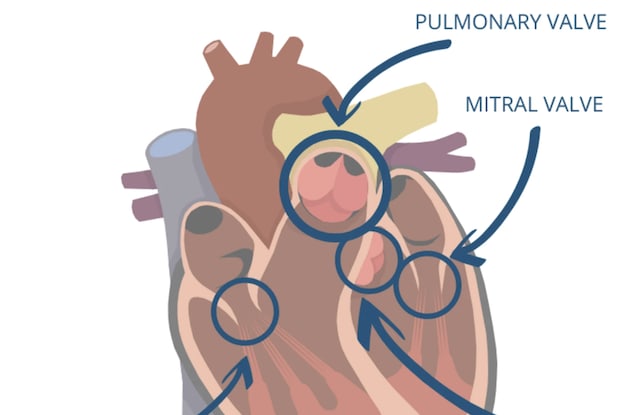
An artificial heart valve may be required if a patient’s natural heart valves don’t work properly. [1] Four conditions that can cause this are stenosis, regurgitation, prolapse, and atresia. [3]
Stenosis
Stenosis happens when a heart valve opening is smaller than normal. This may occur because the valve is narrowed or because the valve flaps did not develop properly before birth. As a result, blood may have trouble moving through the valve, forcing the heart to work harder to pump blood to the rest of the body. [4]
Regurgitation
Regurgitation is when a valve doesn’t close properly, causing blood to “leak” backward. [4]
Prolapse
This is when the valve flaps in the heart “bulge back” into an upper heart chamber (atrium) during a heartbeat. It usually affects the mitral valve. [5]
Atresia
Atresia is when the heart valve lacks a suitable opening for blood to go through. [4]

Other Conditions
Heart valve disorders may be a complication of other conditions, for example:
- Infective endocarditis
- Congenital disorders (disorders you are born with)
- A history of heart failure or heart attack
- High blood pressure
- Atherosclerosis (build-up of waxy substances called plaque)
- Rheumatic disease, caused by an infection that wasn’t treated properly
- Aging can cause calcium buildup on the heart valves, making them stiff or thick [6]
What Are Artificial Heart Valves?
Medications may be prescribed for mild heart valve disorders, but if the condition is serious, the patient may need surgery to repair or replace their heart valves. [7] Replacement valves can be biological (from humans, cows, or pigs) or man-made (from carbon and metal). [8]
Artificial man-made heart valves last longer and don’t need to be replaced, but patients are required to take blood thinners for the rest of their lives. This is because a patient’s risk of having a stroke due to a blood clot becomes high after surgery. [9]
One of the most popular blood thinners used today is warfarin. While it has been used for decades and is well-studied, warfarin requires patients to have regular blood tests. So, it can become a very inconvenient regimen for many. [9] Newer blood thinners, such as Xarelto and Eliquis, do not require regular blood testing. [10]

Why You Shouldn't Take Eliquis With an Artificial Heart Valve
So why shouldn’t patients with artificial heart valves take Eliquis to minimize blood clots?
The answer is complex, but simply put, scientists don’t know how safe Eliquis is for patients with artificial heart valves.
For example, a drug belonging to the same family as Eliquis, dabigatran, was tested to see how it compares with warfarin. Scientists were forced to halt the trial early because too many patients suffered adverse bleeding effects as a result of the dabigatran. This has made medical professionals extra wary. [11]
Eliquis’ official statement is that apixaban is not for people with heart valve problems. They make this very clear in their marketing material and website. [12]
But this study was conducted in 2013. In 2019, scientists once again compared newer anticoagulants with older ones. This time, they compared apixaban (Eliquis!) and warfarin in a-fib patients with a history of bioprosthetic valve replacement or valve repair. This study found that apixaban may be a viable treatment choice for this demographic of patients, though larger trials must be conducted to confirm this. [13]
Warfarin, an Alternative to Eliquis
As an alternative to Eliquis, patients at risk of a dangerous blood clot may be prescribed warfarin instead.
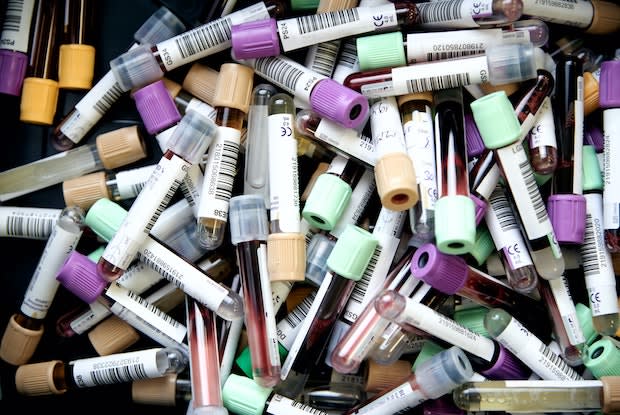
While it has a long history of use, warfarin treatment must be monitored carefully so that the blood is not completely prevented from clotting. This means patients may need to undergo regular blood tests, and dosages may change throughout treatment. However, it is also easier to reverse in urgent or emergent clinical settings. [14]
Patients may also need to monitor their diet. Some foods can impact the effectiveness of warfarin. Eating foods that are too rich in vitamin K — such as broccoli and spinach — can interfere with warfarin. However, do not make any drastic changes in your diet without first talking to your doctor. [14]
Talk to a Licensed Pharmacist at RxConnected.
If you have a heart valve condition, you should first contact your doctor and have a discussion about your treatment options. Your doctor will prescribe the best medication suited to your unique needs.
If you have questions about your medication, including how you can afford it, contact us! We can provide all our customers with access to a British Columbia-licensed pharmacist.
FAQ: Do You Have to Take Blood Thinners With an Artificial Heart Valve?
Yes, many people need blood thinners after artificial heart valve surgery, but how long you take them depends on the type of valve you have. People with mechanical heart valves usually need blood thinners for life. People with bioprosthetic valves may only need them for about 3 months, or as directed by their doctor. [1]
Mechanical valves are made from carbon and metal. [1] People with mechanical heart valves can develop clots on the valve, and those clots may later break away and travel through the bloodstream. This risk happens because blood moves with intense force around the valve, which can activate platelets and trigger clotting in that area. [15] Warfarin is commonly used for patients who need long-term blood thinner treatment after artificial heart valve replacement. [15]
To stay safe after artificial heart valve surgery:
- Ask whether you have a mechanical valve or bioprosthetic valve.
- Confirm how long you need blood thinner medication.
- Follow your doctor’s monitoring instructions.
- Do not stop your blood thinner unless your doctor tells you to.
- Ask your pharmacist if you are unsure how to take your medication.
DISCLAIMER: The content in this article is intended for informational purposes only. This website does not provide medical advice. In all circumstances, you should always seek the advice of your physician and/or other qualified health professionals(s) for drug, medical condition, or treatment advice. The content provided on this website is not a substitute for professional medical advice, diagnosis or treatment.